
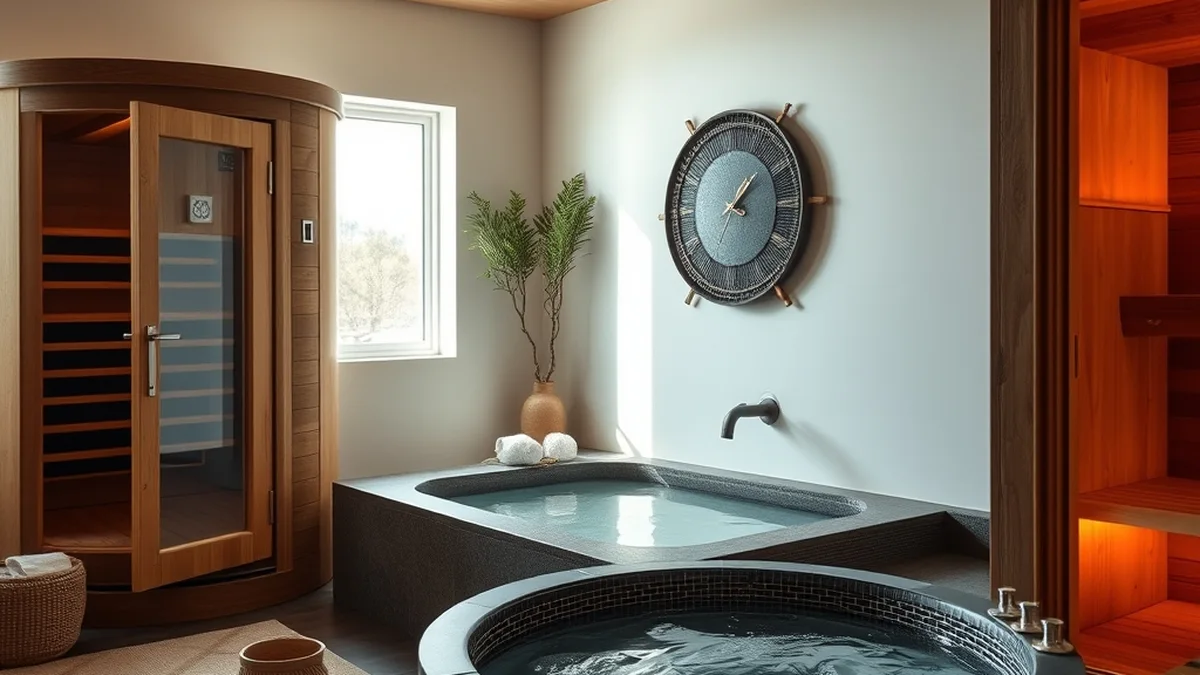
Infrared Sauna vs Cold Plunge: Heart Rate Variability & Dopamine Boosts
Infrared saunas and cold plunges represent two distinct modalities in the realm of biohacking, each offering unique physiological benefits. Infrared saunas enhance heart rate variability (HRV), a marker of autonomic nervous system balance, while cold plunges stimulate dopamine release, impacting mood and motivation. Understanding these mechanisms can guide individuals in optimizing their longevity strategies.
Mechanisms of Heart Rate Variability Enhancement via Infrared Sauna
Heart rate variability (HRV) is a critical biomarker reflecting the autonomic nervous system’s adaptability and resilience. Infrared saunas, through the application of heat, induce a state of hyperthermia that can lead to increased HRV. This occurs as the body responds to elevated temperatures by activating the parasympathetic nervous system, which promotes relaxation and recovery. Studies have shown that regular use of infrared saunas can elevate HRV, suggesting improved cardiovascular health and stress resilience.
In a clinical trial involving 40 participants, those who engaged in infrared sauna sessions three times a week for four weeks exhibited a significant increase in HRV compared to a control group. The average HRV score rose from 45 ms to 60 ms, indicating a shift towards greater parasympathetic dominance. Such improvements in HRV are associated with reduced risk of cardiovascular diseases and enhanced overall well-being, illustrating the sauna’s role in promoting metabolic and cellular longevity.
Dopamine Kinetics and Cold Plunge Therapy
Cold plunges activate the sympathetic nervous system, leading to a surge in catecholamines, including dopamine. This neurochemical response not only enhances mood but also promotes cognitive clarity and motivation. The rapid exposure to cold water triggers a physiological stress response, which results in increased dopamine levels, providing an immediate boost in energy and alertness. Research indicates that cold exposure can elevate dopamine by as much as 250%, significantly impacting mental health and motivation.
A study published in the journal *Neuroscience Letters* demonstrated that participants who engaged in cold water immersion for three minutes experienced a notable increase in dopamine levels post-exposure. This effect can be particularly beneficial for individuals seeking to enhance their mental acuity and emotional well-being. The implications of this dopamine surge extend beyond immediate effects, as regular cold exposure may contribute to long-term improvements in mood regulation and resilience against stress.
Comparative Analysis: HRV Gains vs. Dopamine Release
While both infrared saunas and cold plunges offer unique benefits, their effects on HRV and dopamine release can be viewed as complementary rather than mutually exclusive. Infrared sauna sessions promote cardiovascular health and stress resilience through enhanced HRV, while cold plunges provide acute boosts in dopamine that can enhance mood and cognitive function. Understanding the nuances of these modalities allows individuals to tailor their wellness routines effectively.
For instance, a biohacker might choose to incorporate infrared sauna sessions into their weekly regimen for sustained cardiovascular benefits, while also integrating cold plunges to capitalize on the immediate mood-enhancing effects of dopamine. A potential weekly schedule could include three sauna sessions and two cold plunges, optimizing both HRV and dopamine levels. This holistic approach can create a synergistic effect, promoting overall metabolic and cellular longevity.
Bioavailability and Dosing Nuances in Sauna and Cold Exposure
When considering the integration of infrared saunas and cold plunges into a wellness routine, understanding the bioavailability and optimal dosing is crucial. For infrared saunas, sessions typically last between 20 to 45 minutes at temperatures ranging from 120°F to 140°F. Regular use, ideally three to four times per week, has been shown to maximize HRV benefits. However, individual tolerance and health status should guide session length and frequency.
In contrast, cold plunges can vary in duration and temperature. A common recommendation is to immerse in water between 50°F to 60°F for 2 to 5 minutes. This duration is effective for eliciting a significant dopamine response without overwhelming the body. As with sauna use, frequency can be adjusted based on individual comfort and response, with some individuals opting for daily cold exposure to maintain elevated dopamine levels.
Related Sterling Lab Briefings: Explore deeper benchmarks in Creatine Monohydrate Dosing: Boost Brain Energy & Preserve Muscle.
Related Sterling Lab Briefings: Explore deeper benchmarks in CoQ10 Ubiquinol: Boosting Bioavailability for Statin Users.
Integrating Infrared Sauna and Cold Plunge into Daily Life
Successfully incorporating infrared saunas and cold plunges into a daily routine requires strategic planning and commitment. Many wellness centers now offer both modalities, making access easier for individuals looking to enhance their healthspan. For those with home setups, investing in an infrared sauna or a cold plunge tub can facilitate regular use, allowing for greater flexibility in scheduling sessions.
To maximize the benefits of both therapies, individuals might consider pairing sauna sessions with cold plunges. For example, a post-sauna cold plunge can enhance recovery and amplify the physiological benefits of heat exposure. Additionally, tracking HRV and mood changes through wearable technology can provide insights into how these practices influence individual health metrics, allowing for data-driven adjustments to routines.
Measuring metabolic and cellular biomarkers over time turns preventive wellness into durable healthspan.